
How to Choose the Right Water Pump
Electric water pumps are a fantastic way to move water around your house and property, but there are so many to choose from — how do you find the correct pump for your application?
The staff at Water Pump Warehouse are here to help you choose the right pump.
Key Terms to Understand
Water Flow Volume
How much water — and how fast — can your pump move? Pumps are usually rated in litres per minute or litres per hour. Consider how much water you want to move: if you want to empty a swimming pool containing 15,000 litres, a 100-litre-per-hour pump would take 150 hours to empty it. A larger pump rated at 30,000 litres per hour could do the job in half an hour.
Head Pressure (or Lift Pressure)
This measures how hard the pump can push water, expressed in metres, PSI, or kPa. Head pressure refers to a theoretical measurement of how far your pump could push water up a vertical pipe. This matters if you want to push water from your dam or tank up to a property 50m above it — for example, if your house sits at the top of a hill, 50m above your dam. We have a wide range of pumps that can push water up to 160m vertically. Keep in mind, though: the longer the pipe and the more bends it has, the more drag on water flow.
PSI (Pounds per Square Inch) or kPa Pressure
Manufacturers and retailers sometimes confuse buyers with these figures, but they’re just another way of expressing head pressure. To convert PSI to head pressure, multiply by 2.31 — for instance, 15 PSI becomes roughly 35 feet (about 12m) of head pressure. kPa is the metric measurement of pressure (short for kilopascal): 10 kPa is equivalent to 1.45 PSI, or 1.0m of head pressure.
Suction Head Pressure
This is how far your pump can suck water up vertically. For example, if your dam is 6m deep and you run a hose to the bottom, your pump needs enough suction power to pull that water up 6m into the pump body.
Choosing the Right Pump for Your Application
First, determine what you want the pump to do and what environment it will be in. Do you have 240V power available, or will it be petrol-powered? Will it be used indoors or outdoors? Different water pumps come with different features, so it’s important to choose one with the features required for your task.
Here are the most popular pump applications:
- Dam or flood pump — for moving clean or dirty water from your dam to the garden, crops, a tank, or another dam
- Sprinkler or irrigation pump
- Submersible utility pump
- Well pump — for bringing water from a well to your house
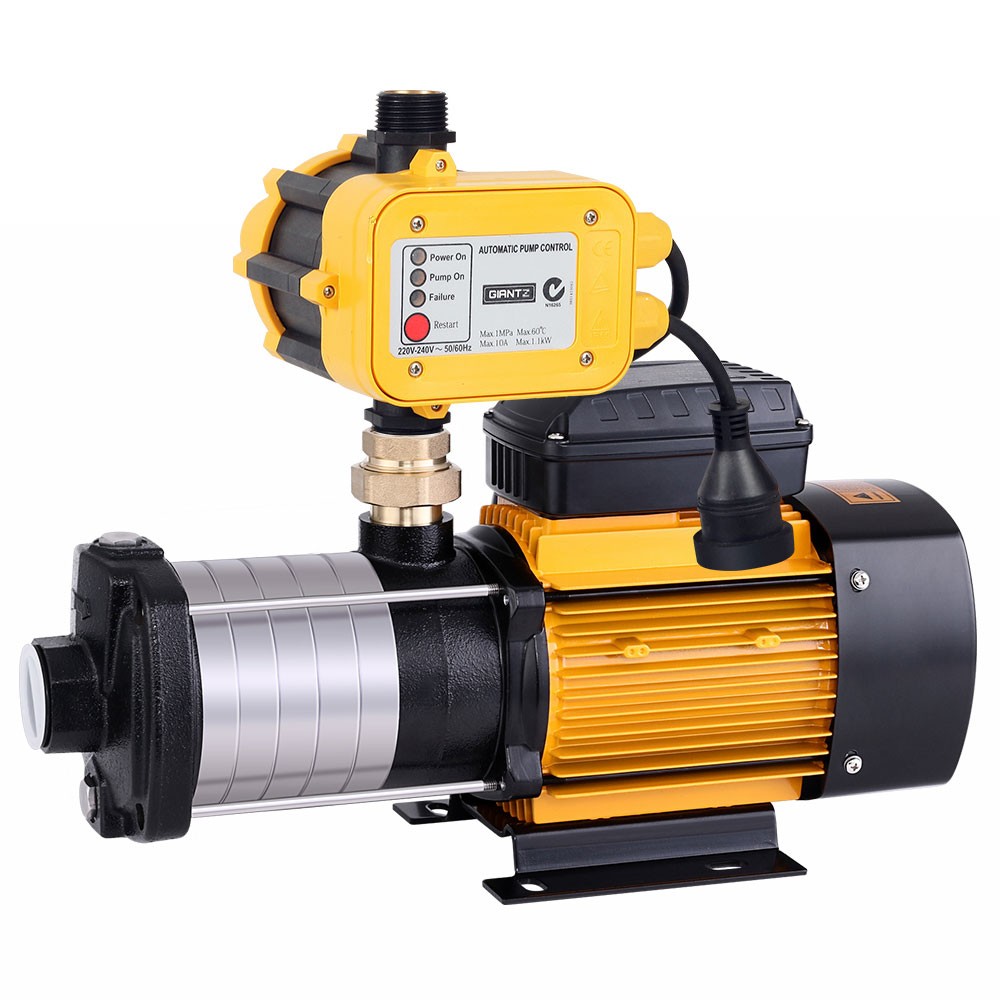
- Booster pump — for increasing water pressure within your home
- Fountain or water feature pump
- Fire hose pump
- Swimming pool pump
Portable 4-Stroke Dam, Flood, or Fire Pump
These pumps are very useful for clearing floodwater, moving water between dams, or spreading dam water around your property. They’re usually petrol-powered, since they’re often needed far from an electric power point — and if there’s a fire in the area, you may not be able to rely on electricity at all.
You’ll need a self-priming pump with good suction, since you’re usually moving water from low ground to higher ground. Pumps are often rated by suction head — think about how deep your water source is and choose a pump that can suck uphill accordingly. For example, a 10m-deep dam or well requires a pump with at least 10m of suction head pressure capability.
You’ll also need to match the flow rate to the amount of water you want to move. A pump with a larger inlet (50-100mm) and a bigger body and motor will move water faster than one with a 25mm inlet — but again, it depends on the application. Emptying a small water tank typically only needs a 25mm inlet, while emptying a large dam calls for a 50-100mm inlet with greater flow capability.
Sprinkler or Irrigation Pump
These popular pumps are typically attached to mains water or tank water and boost pressure for sprinklers and watering systems across larger properties.
To work out your requirements, count the number of sprinkler heads you plan to use and check their recommended litre/hour rating and pressure requirements. For example, 20 sprinkler heads rated at 3 litres per minute each would require a pump capable of 60 litres per minute (3,600 litres per hour).
You can also calculate based on the size of the area you wish to irrigate. An average garden requires 6-20 litres of water per m² per day, depending on soil type and season — meaning a 100m² garden may need 600-1,000 litres per day. If you plan to run your pump for one hour per day, that’s the volume to aim for.
Submersible Pumps
These pumps use a clever design where the pump and motor are encased in a waterproof housing and fully immersed in water. They’re usually very efficient, since they push water rather than pull it — using a spinning impeller and centrifugal force to push water out and pressurize the system. Submersible pumps are commonly used for irrigation, pumping water from a well or bore, and draining unwanted bodies of water.
Well Pumps
These are also usually submersible pumps — see Submersible Pumps above.
Booster Pumps
These pumps are specifically designed to boost pressure in hot water systems. Many homes still use an older gravity-fed hot water system, which doesn’t rely on mains pressure — instead using a header tank in the roof cavity, which often struggles to provide a satisfying shower. A booster pump can double the water pressure of these gravity-fed systems.
The pump design is a circulation pump fitted with seals and bearings rated to withstand temperatures up to 100°C. Some models include a flow switch, so the pump senses water flow and activates automatically, then switches off when the hot water tap is closed.
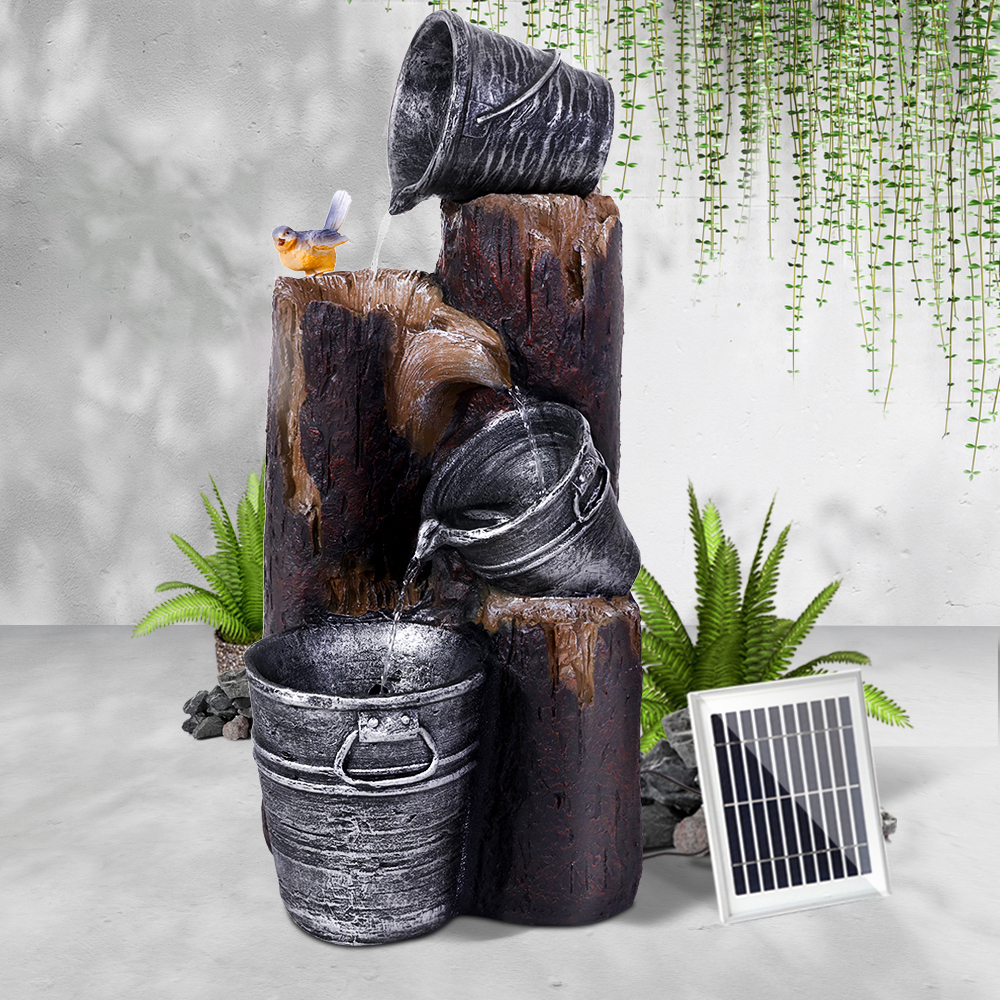
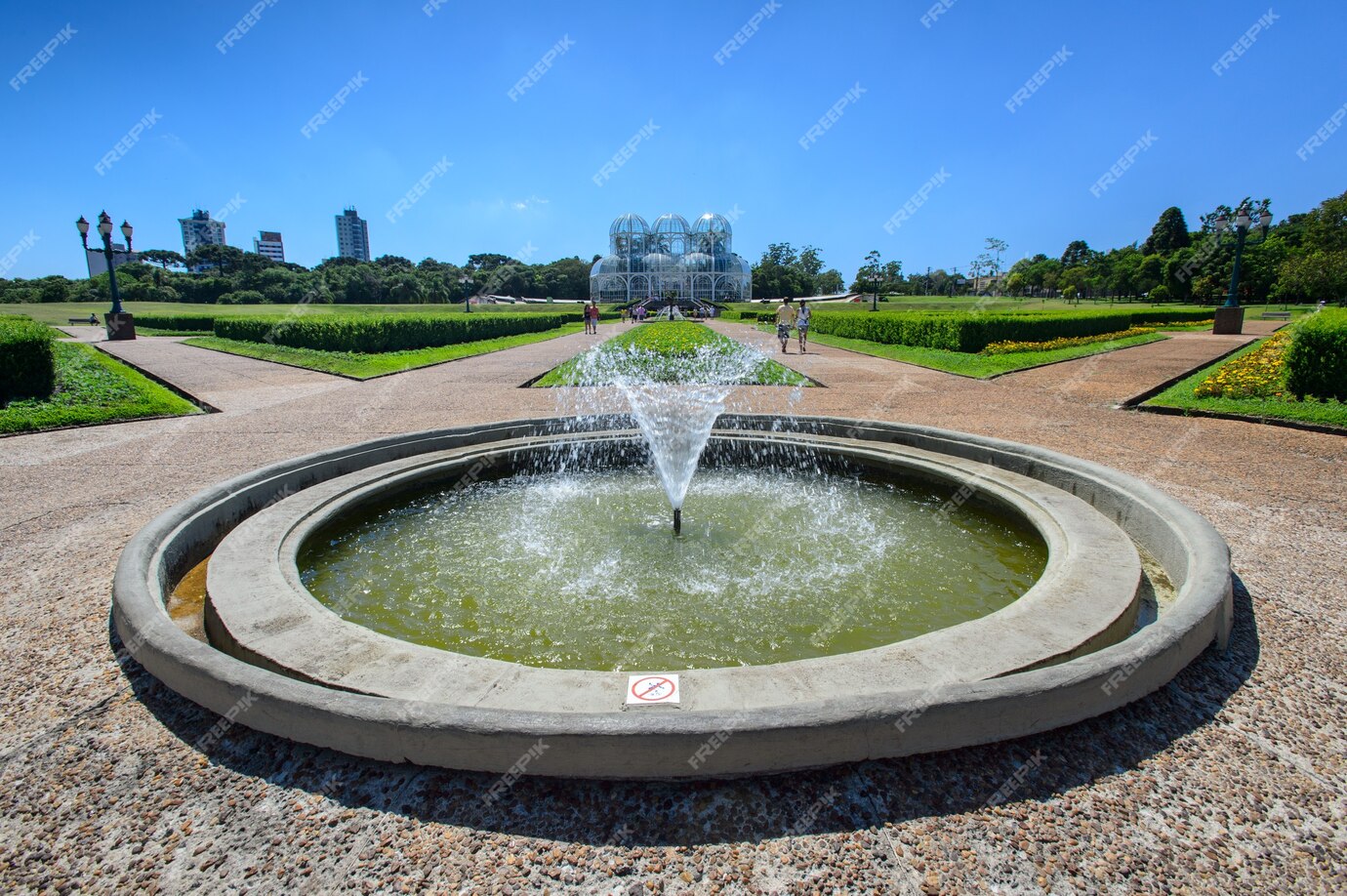
Fountain or Water Feature Pumps
These are typically simple, low-to-medium flow pumps that create a fountain effect or pump water from a pond to a higher point for a small waterfall effect. Flow rates range from 200 to 1,600 litres per hour, with higher-rated pumps able to spray up to 3.0-4.0 metres.
These pumps are submersible and sit at the lowest part of your pond, with the fountain spray mounted on top — or a hose attached to carry water to a higher level.
Many are solar-powered and don’t need a mains power supply. Basic versions turn off on cloudy days or at night, while more expensive models include battery backup to keep running through cloudy weather. Some models also include LED lighting to illuminate the fountain. Prices range from $50-$300.
Fire Hose Pumps
These pumps are usually petrol-powered, since they’re often needed far from an electric power point — and if there’s a fire in the area, you may not be able to rely on electricity.
You’ll need a self-priming pump with good suction, as you’re typically moving water from low ground to higher ground. (Most of these pumps require a small amount of water added to the pump body to prime it before initial startup.)
As with other suction-based pumps, check the depth of your water source and choose a pump rated for that suction height — a 10m-deep dam or well requires at least 10m of suction head pressure capability. You’ll also need to match the flow rate to the volume of water you want to move.
Swimming Pool Pumps
A correctly sized swimming pool pump is essential to keeping your pool clean. It circulates water through a filter to keep everything sparkling.
The correct size will circulate your entire pool volume every 8-10 hours. For a 15,000-litre pool, you’ll need a pump that can circulate 2,000-3,000 litres per hour.
Also choose a pool pump that matches your plumbing — whether that’s 1½” (38mm) pipework or 2″ (50mm), which is common in many pools.
Finally, factor in the distance between the pump and the pool: the greater the distance, the more drag, which may require a larger pump.