

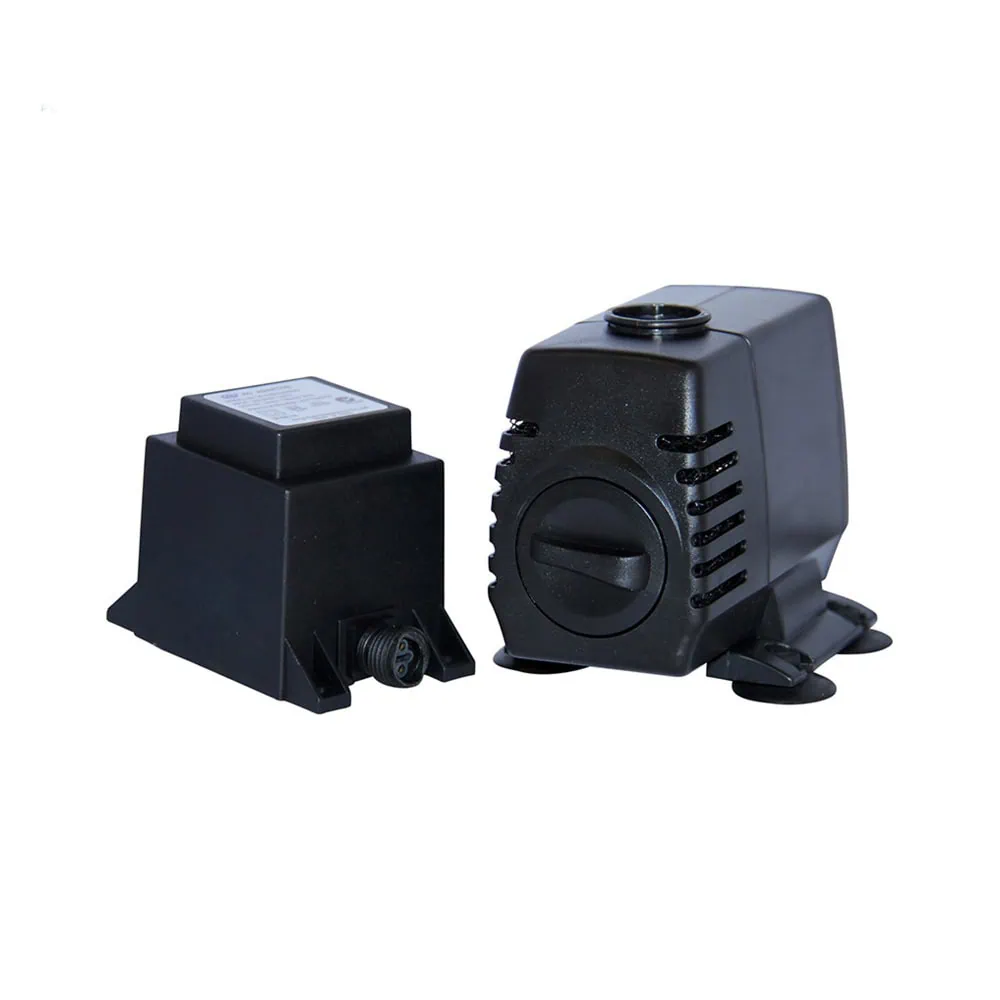
240V vs Low Voltage Water Pumps: Which One Is Right for Your Setup?
Low voltage water pumps or standard 240V options: which one suits your home, garden, or rural property? The answer comes down to understanding your power availability, performance needs, and safety considerations. Two of the most common electrical setups for water pumps in Australia are 240V mains power and Low Voltage (12V / 24V DC). Whether you are powering a garden pond, running an off-grid solar system, or boosting household water pressure, understanding the trade-offs between 240V and low voltage water pumps will help you choose the best equipment for your needs.
What is a 240V Water Pump?
A 240V water pump connects directly to standard Australian household mains electrical outlets. These pumps operate on standard alternating current (AC) voltage and are typically designed for continuous, heavy-duty applications requiring high pressure and large flow volumes.
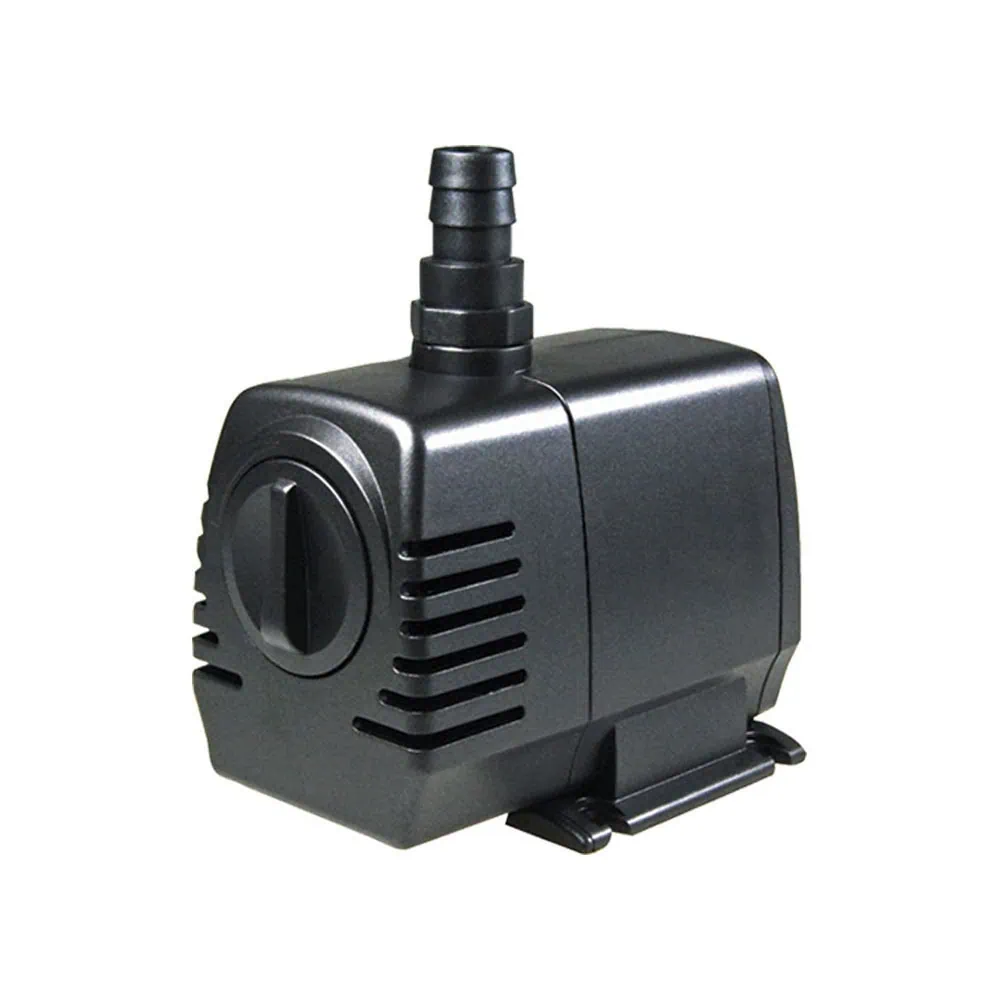
240V pumps connect directly to mains power for high-flow, continuous applications.
Advantages of 240V Pumps
- Higher Power & Head Pressure: 240V pumps deliver substantially higher flow rates and lift heights, making them ideal for high-demand tasks such as whole-house pressure boosting, large garden irrigation, and deep-well submersible applications.
- Plug-and-Play Convenience: Plugs directly into standard domestic AC power points without requiring transformers, adaptors, or specialized battery setups.
- Consistent Operation: Powered by the main electrical grid, 240V pumps run continuously without concerns about battery drain or direct sunlight dependency.
Disadvantages of 240V Pumps
- Safety & Wiring Regulations: Operating at higher voltage presents a greater risk of severe electrical shock around water. Hardwiring or permanent outdoor installations often require professional electrical work and standard residual current device (RCD) protection.
- Grid Dependency: If the grid drops out or you are in a remote off-grid area, a standard 240V pump cannot function unless connected to a generator or heavy-duty power inverter.
- Higher Energy Costs: Larger 240V electric motors consume more electricity, which can impact your ongoing utility bills during heavy seasonal use.
What is a Low Voltage Water Pump?
Low voltage water pumps operate on direct current (DC) — typically 12V or 24V (classified under Australian standards as Extra-Low Voltage) — or use a transformer to convert 240V AC down to a lower, safer voltage. These are commonly used for solar pond pumps, RV and caravan plumbing, livestock watering, and decorative water features.
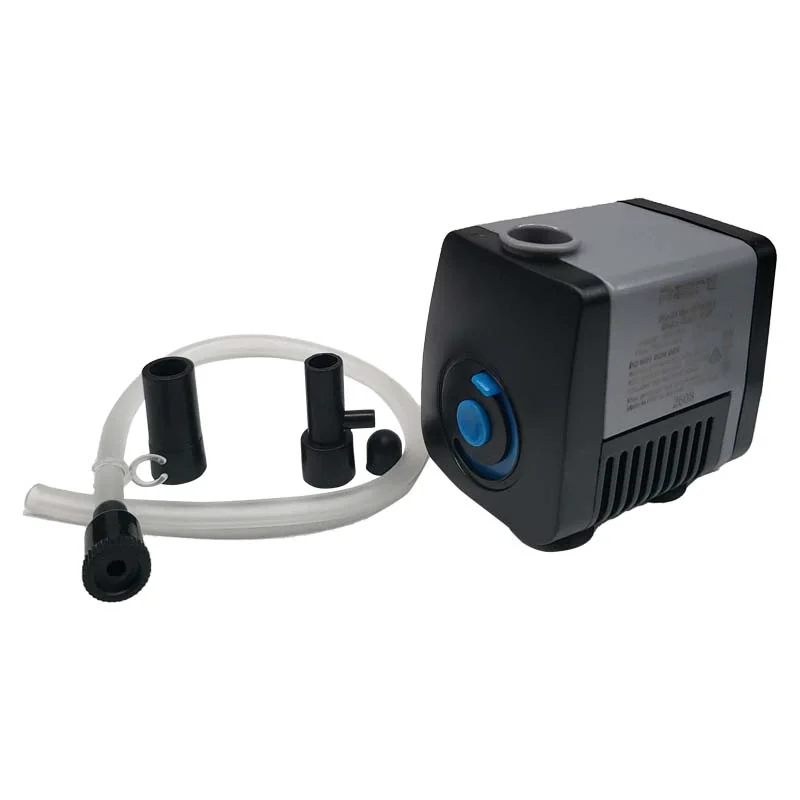
Low voltage (12V/24V) pumps are safe, energy-efficient, and ideal for solar or off-grid setups.
Advantages of Low Voltage Pumps
- Enhanced Safety: Low voltage systems operate well below dangerous electrical thresholds, drastically reducing shock hazards near water bodies such as garden ponds, aquariums, and livestock troughs.
- Ideal for Off-Grid & Solar Systems: Low voltage water pumps pair naturally with 12V/24V solar panels and deep-cycle battery banks without requiring power-draining inverters.
- DIY-Friendly Installation: Most low voltage installations do not require a licensed electrician, allowing easy setup and flexible placement.
- Energy Efficient: Designed for low power draw, helping minimize operating costs and maximize battery runtime.
Disadvantages of Low Voltage Pumps
- Limited Pressure and Flow Rate: Low voltage motors generally offer lower flow volume and vertical head pressure compared to 240V alternatives.
- Voltage Drop Over Distance: Long cable runs can lead to significant performance drops unless heavy-gauge wire or specialized extension leads are used.
- Intermittent Power (Solar-Only): Solar-powered low voltage water pumps without battery backups will pause or reduce output during overcast conditions or at night.
Side-by-Side Comparison
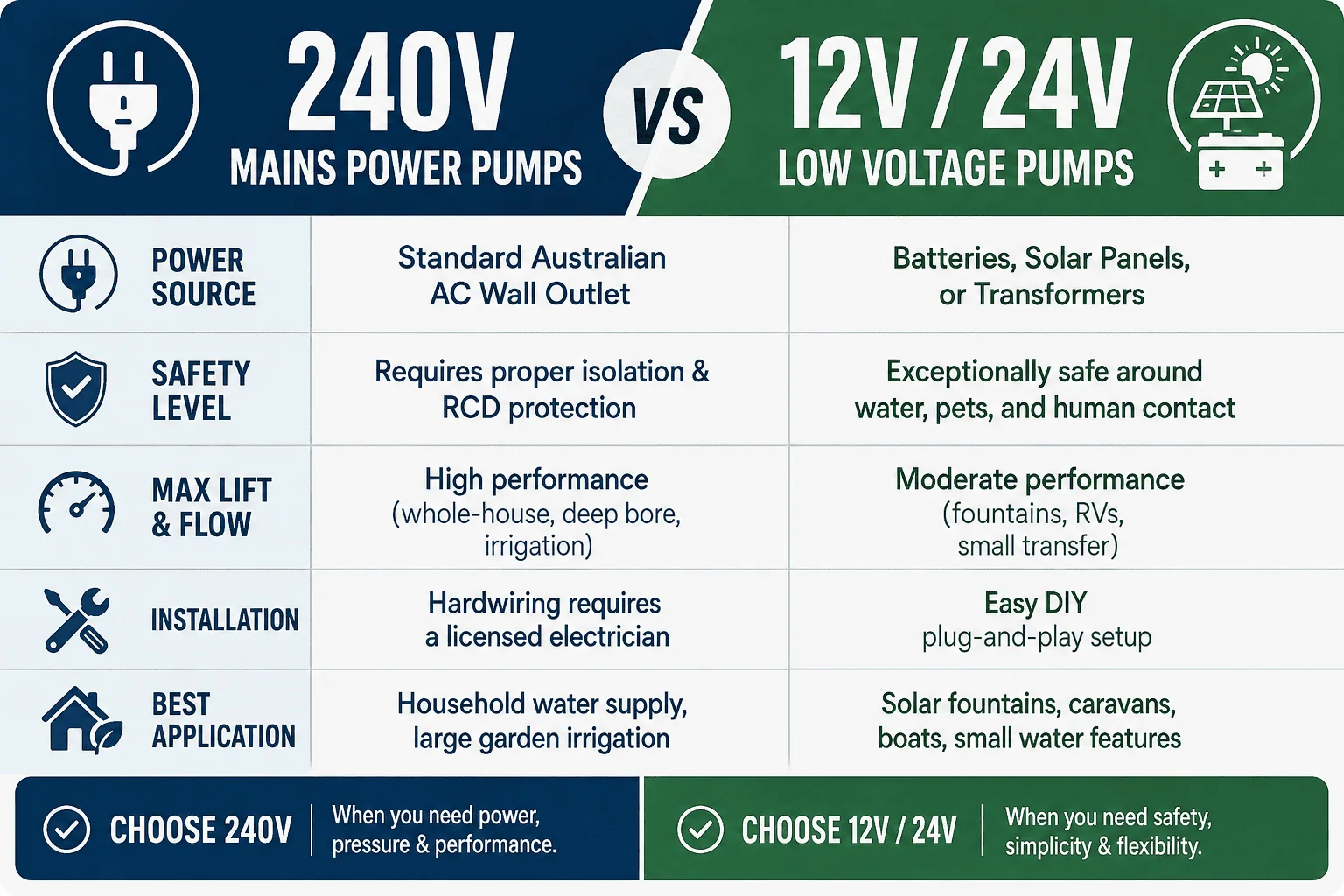
Quick comparison: Mains power vs. low voltage setups.
| Feature | 240V Mains Power Pumps | Low Voltage (12V / 24V) Pumps |
|---|---|---|
| Power Source | Standard Australian AC Wall Outlet | Batteries, Solar Panels, or Transformers |
| Safety Level | Requires proper isolation & RCD protection | Exceptionally safe around water, pets, and human contact |
| Max Lift & Flow | High performance (whole-house, deep bore, irrigation) | Moderate performance (fountains, RVs, small transfer) |
| Installation | Hardwiring requires a licensed electrician | Easy DIY plug-and-play setup |
| Best Application | Household water supply, large garden irrigation | Solar fountains, caravans, boats, small water features |
Helpful Resources & Guides
Internal Resources
- Water Pump Warehouse Australia Homepage
- 240 Volt & Low Voltage Water Feature & Pond Pumps
- How to Choose the Right Water Pump
- Household Water Pumps: Types, Applications, and Benefits
External Regulatory & Industry Standards
- NT WorkSafe Safety Alert: Safety Guidelines for 240V vs 12V Submersible Pumps
- WorkSafe Queensland: Prescribed Electrical Equipment & Low Voltage Regulations
- AS/NZS 3000 Australian Wiring Rules & Standards Overview
- PondMAX Australia: Guide to Choosing Pond and Water Feature Pumps
Need Help Finding the Right Pump?
Whether you need high-output 240V household pressure or an efficient low voltage water pump setup for solar or off-grid use, having the correct specification ensures reliability and safety.
👉 Explore Our Full Range of Water Pumps Here to find the perfect fit for your property.
