

Household Water Pumps: A Comprehensive Guide to Types, Applications, and Benefits
Some residential homes in Australia experience water shortages and inconsistent water supply. These issues are common in remote areas with limited water supply or in residential buildings with lower water pressure on higher floors.
Residences have only one solution: a household water pump. These units are essential for providing a reliable water supply to homes and residential buildings, and they come in various types, each with their own advantages and disadvantages.
If you’re one of the households in Australia that may require one, this article will help you address your water-related issues and provide a more reliable supply to your home.
Different Types of Domestic Pumps: Their Pros and Cons
There are four main types of domestic pumps. Let’s check on their characteristics, applications, advantages, and disadvantages.
Centrifugal Pumps – Suitable for Most Household Applications
| Pros of Centrifugal Pumps | Cons of Centrifugal Pumps |
|---|---|
| Easy installation Energy-efficient Low maintenance High flow rates |
Limited pressure boost Water quality Noise Temperature sensitivity |
A centrifugal unit is easy to install, and you can have it in various configurations depending on your household’s specific needs. It consumes less power and generates less heat while achieving high flow rates, making it ideal for households needing large water volumes.
Generally, this is the most common type for household water supply due to its reliability, simplicity, and cost-effectiveness. However, there are some cases you might have to look into.
While a centrifugal pump can increase pressure, it has a limit to the amount it can boost. Water treatment or filters may also be necessary, as this type is less effective at handling water quality issues. Debris and contaminants may be present in the supply.
Moreover, this type is temperature sensitive. If one overheats, it causes damage to the motor.
Jet Pumps – Suitable for Households with Shallow Wells or Low Water Pressure
| Pros of Jet Pumps | Cons of Jet Pumps |
|---|---|
| Easy installation Affordable Low maintenance Suitable for shallow wells |
Noisy Limited lift capacity Limited flow rates Require regular maintenance Require foot valve |
A jet pump is more suitable for households with shallow and limited-depth wells. It is easy to install and can be done above ground. These units require regular maintenance to operate efficiently, including regular cleaning and replacement of parts when needed.
However, jet pumps have a limited lift capacity and lower flow rate, which is unsuitable for a household requiring a high volume. They also need a foot valve to prevent air from entering, which is prone to failure or clogs.
This option may be cost-effective, but if it can’t meet your needs, it’s not the best choice for you.
Submersible Pumps – Suitable for Households with Deeper Wells
| Pros of Submersible Pumps | Cons of Submersible Pumps |
|---|---|
| Efficient Quiet Suitable for deep wells Low maintenance |
Expensive Difficult to install Difficult to repair Reduced water quality |
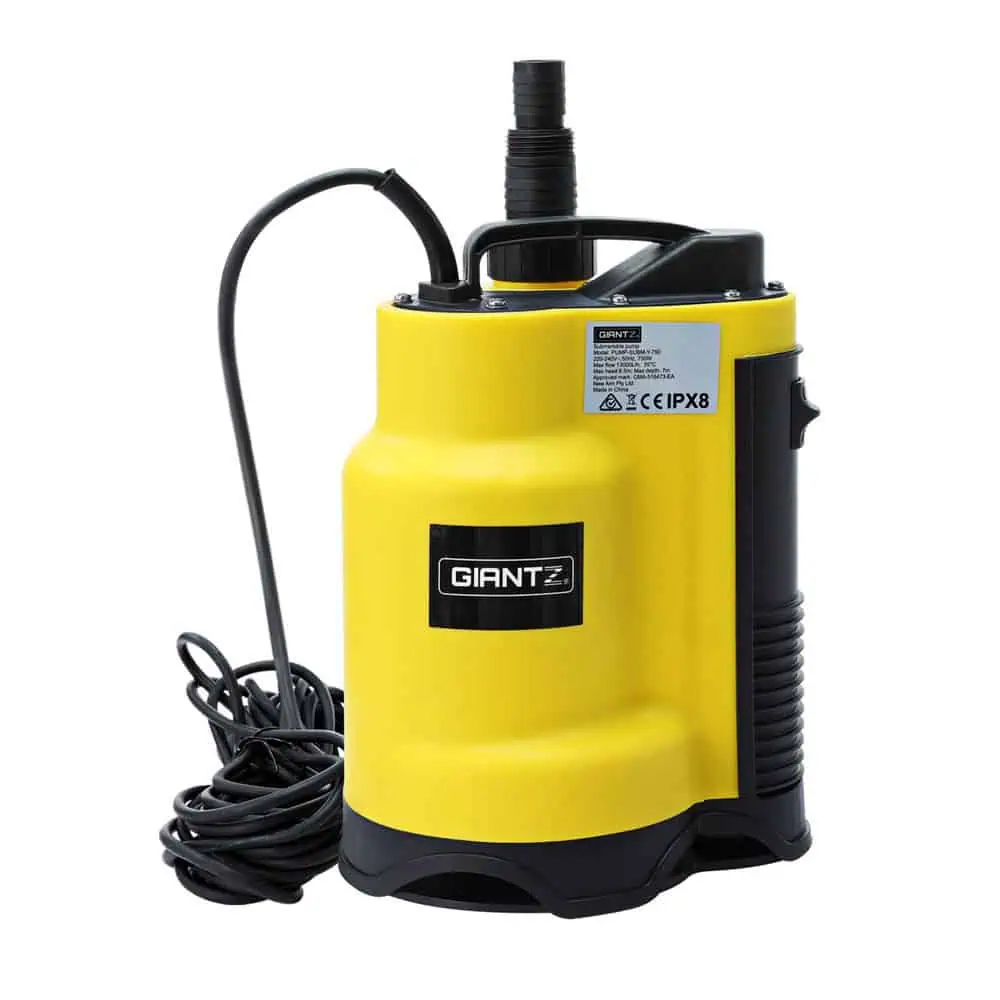
Submersible pumps are designed to be completely submerged, making them a popular choice for households with deep wells or other applications where the unit needs to sit underground or in a confined space. This option is expensive, which can be a deterrent for households on a budget.
Even though these are designed to work with deep wells, they use less energy and generate less heat. They’re also quieter than other types, since they’re confined underwater, helping reduce noise.
Although low maintenance, submersibles are difficult to repair and install because they’re located underwater, making them harder to access for servicing.
Booster Pumps – Suitable for Households with Low Water Pressure
| Pros of Booster Pumps | Cons of Booster Pumps |
|---|---|
| Easy installation Increases water pressure Increases flow rate Space-saving |
Increased energy consumption Noise Reduced water quality High maintenance |
Booster pumps are designed to increase pressure and flow rate in household systems, making them ideal for homes with low water pressure. They can be helpful for filling large containers or running high-volume appliances. However, this requires more electricity and produces noise during operation.
Proper installation and maintenance are crucial to ensure optimal performance and avoid any negative impacts on water quality. If not installed and maintained properly, it may cause turbulence and introduce air into the system.
Ultimately, the best option will depend on the specific needs of the household, so it’s essential to look into the factors suitable for your situation before carefully weighing the available choices.
Factors to Consider When Choosing a Household Water Pump
It is not easy to make this choice. You have to consider several factors to ensure you select the right one for your specific needs. Here are some to keep in mind:
- Water Source and Depth. The type of water source and its depth will help determine what you need. For example, a submersible unit is most likely appropriate for deeper wells.
- Amount of Water Volume. Your water needs are essential for determining the type you must install. If you need a large volume, you need something with a higher flow rate capacity.
- Water Pressure. If the source in your home has low pressure, you may need a booster unit to increase it.
- Power Supply. Some units require special wiring, a dedicated circuit, or a higher voltage. You have to check the power supply at your home.
- Noise. You have to choose a quiet or reduced-noise option, especially if it’s installed near living spaces.
- Maintenance. Different units have different maintenance requirements. You have to consider the frequency and the repair and replacement cost.
Consider these factors to choose a household water pump that can meet your specific needs and provide a reliable